Jewelry
Jewelry Packaging Guide: Boxes That Match the Value of the Piece
Jewelry packaging has a narrower job than most categories: the box doesn't need to protect against crushing weight or leaking liquid, but it does need to present a small, high-value object in a way that matches — or doesn't undercut — the price on the tag. A $40 box around a $30 ring reads as overcompensating. A flimsy box around a $400 piece reads as a red flag.
This guide covers the box types specific to jewelry, how materials and closures change by piece type, sizing conventions, and what shifts when the piece ships direct to a consumer rather than sitting in a retail display.
A box for every piece type
Jewelry splits by how the piece is worn and displayed, and each shape has settled on a fairly standard box design across the industry.
| Piece type | Box type | Key design detail |
|---|---|---|
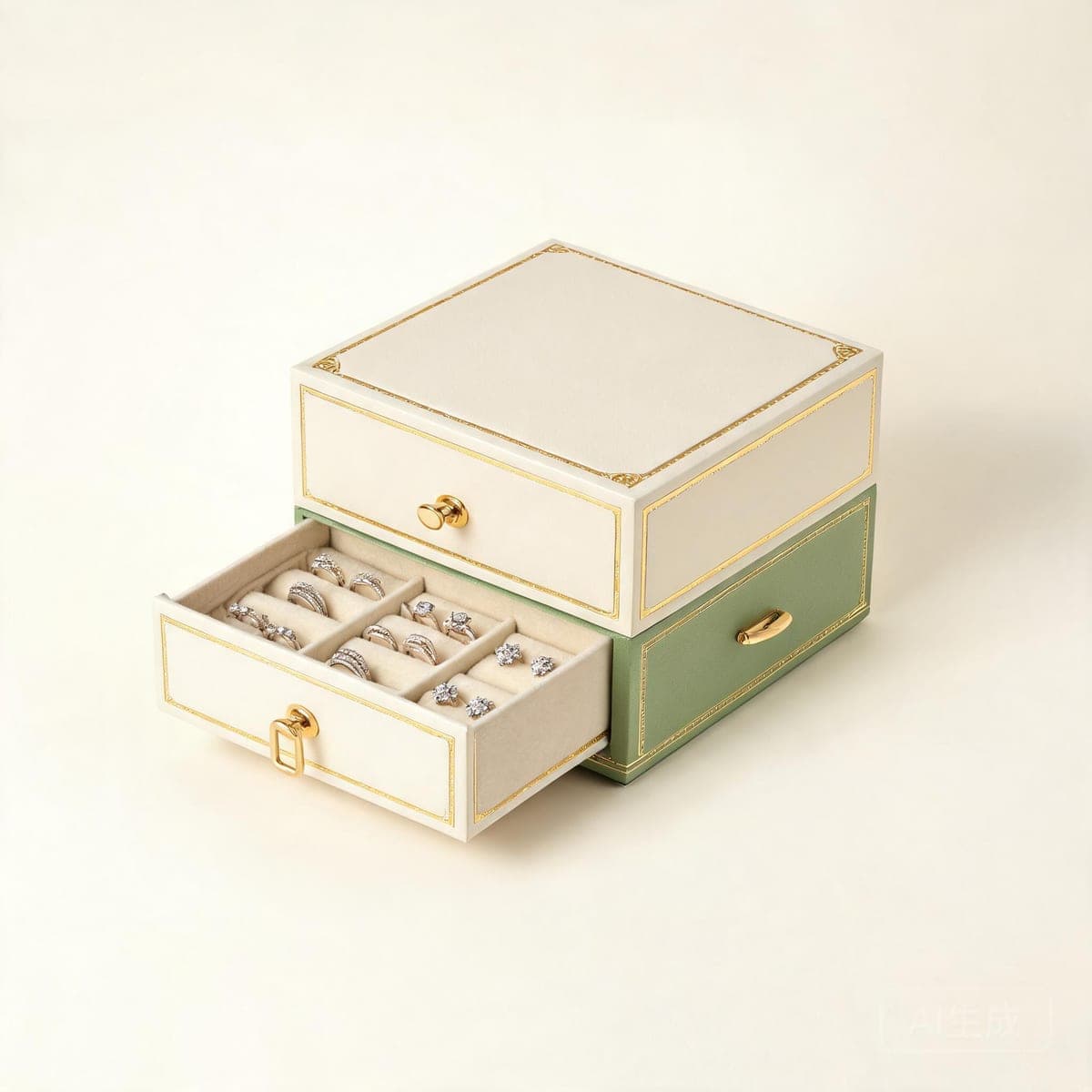
| Ring | Small hinged or lift-off box, velvet ring slot | The slot's cut, not the box exterior, is what makes a ring look presented rather than stored |
| Necklace or pendant | Wider flat box with a raised neck-form or flocked groove | Displays the chain in its natural drape rather than coiled flat |
| Bracelet | Mid-size box with a curved velvet cushion or ridge | A slight curve in the cushion stops chain-style bracelets tangling in transit |
| Earrings (stud or drop) | Flat box with slotted posts or hooks | Studs, hoops and drops each need a different holding method — specify which when ordering |
| Watch | Cushion or pillow box, sized to case and strap | Needs your case diameter and strap width, not a generic size |
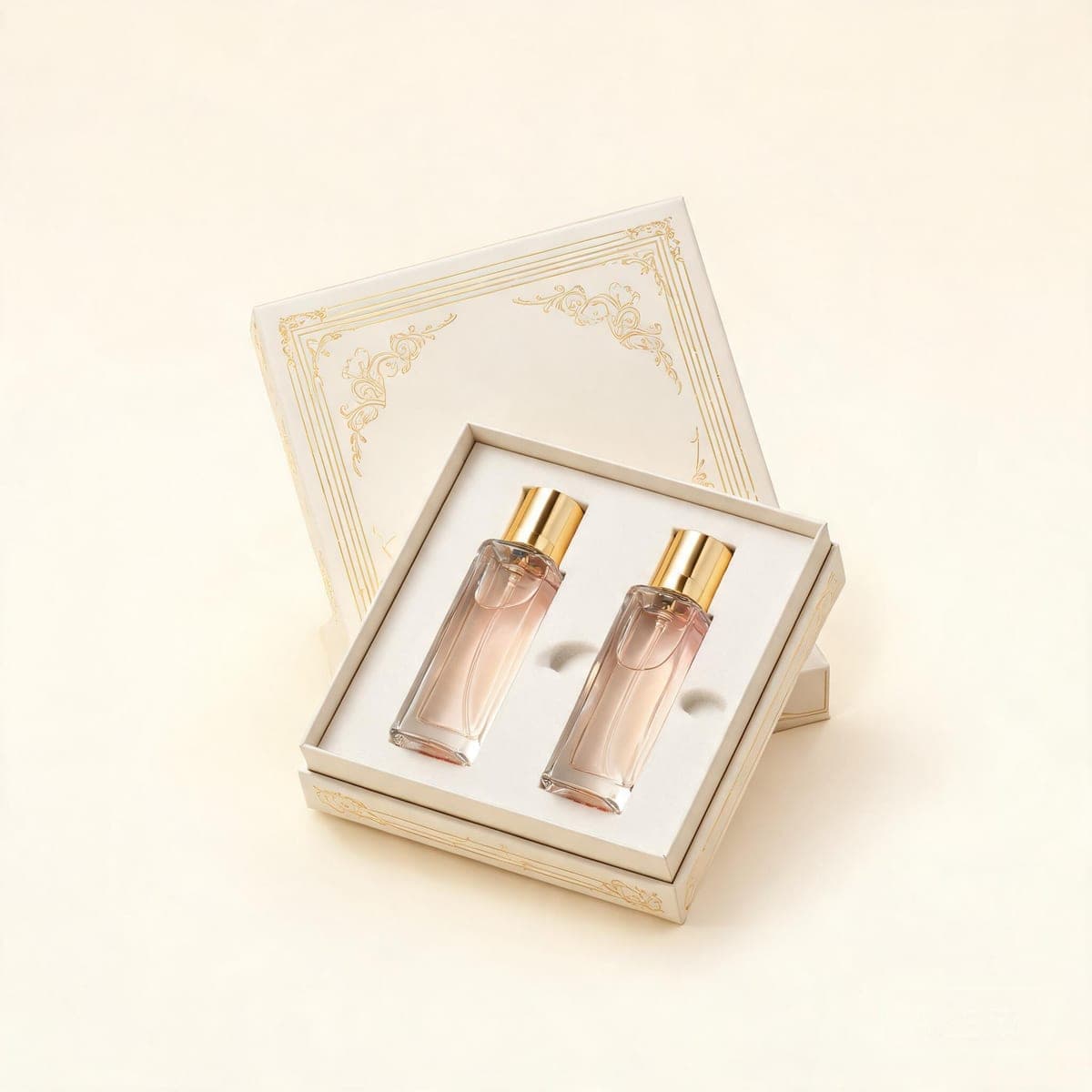
| Multi-piece set | Multi-well tray inside a two-piece box | Each well shaped to its specific piece — the tray is the real engineering, not the outer box |
Materials: what they signal, not just how they look
Three exterior materials cover most of the category, and buyers read them slightly differently even at a glance.
- Velvet wrap — the most tactile option; reads as fine jewelry and heirloom-grade even on a modest piece
- Leatherette (PU) — a firmer, more structured feel; common on watch boxes and for brands wanting a slightly more masculine or minimalist register
- Matte art paper with soft-touch lamination — the economical option at volume; with the right foil detail it reads close to leatherette at a noticeably lower unit cost
A useful rule: match the exterior material across a brand's full range (rings, earrings, necklaces) rather than choosing per-SKU — a customer who buys a ring and later a necklace from the same brand should get boxes that visibly belong together.
Board and structure by piece weight
Jewelry is light, so board thickness in this category is chosen for shape retention over years on a shelf, not for crush resistance.
| Box size | Typical board | Why |
|---|---|---|
| Ring, earring | 1.5–1.8mm | Small footprint holds its shape well even at a lighter thickness |
| Necklace, bracelet | 1.8–2.0mm | Wider lid needs more rigidity to avoid sagging over time |
| Watch, multi-piece set | 2.0mm | Larger footprint and, for sets, a loaded multi-well tray both need the extra rigidity |
Closures and finishing
Jewelry boxes tend to use one of three closures, and finishing stays deliberately restrained since the exterior material already carries most of the perceived value.
- Magnetic flap — the most common closure across ring, earring and bracelet boxes; clean, reusable, no moving parts to fail
- Hinge — common on ring boxes specifically, allowing the box to stay open one-handed during a presentation moment
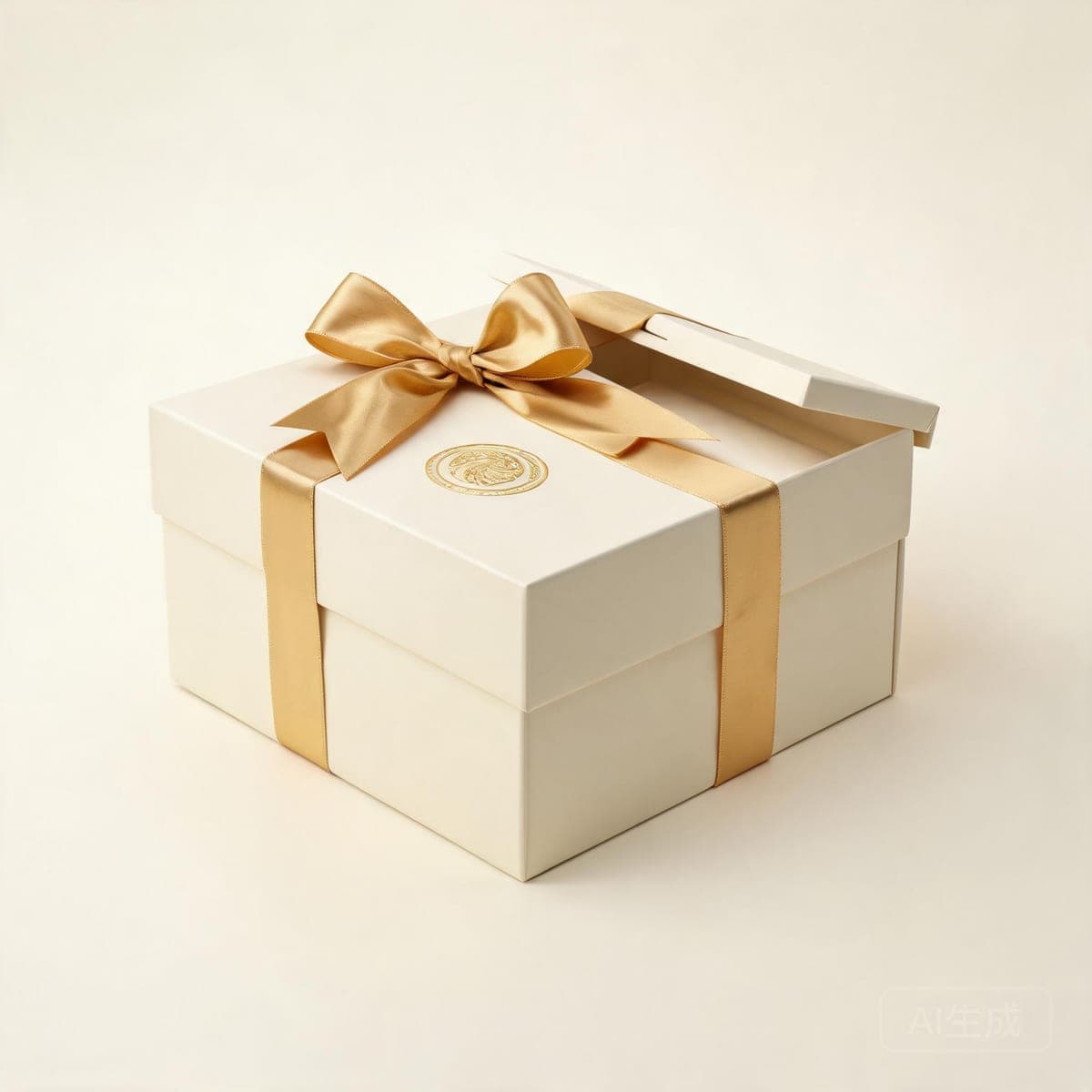
- Ribbon or elastic band — a lower-cost closure, often paired with a slipcase sleeve over a plain box
- Finishing is almost always a single foil-stamped logo, positioned identically across every box in a brand's range — the restraint is deliberate, not a missed opportunity
Retail display box vs. e-commerce mailer
A box designed for a jewelry counter and a box designed to survive a courier are different problems, and conflating them is a common first-order mistake.
| Consideration | Retail display box | E-commerce mailer |
|---|---|---|
| Primary job | Presentation at point of sale | Surviving transit, then presentation on opening |
| Outer protection | Minimal — handled carefully in-store | Needs a rigid outer or a separate shipping carton around it |
| Branding surface | Box itself, often displayed on a counter | Box plus an outer mailer or sleeve, since the box may travel inside a plain shipper |
| Cost sensitivity | Lower unit volume, cost less critical | Often higher volume, unit cost more visible in margin |
Brands selling both channels often use the same presentation box for both, but add a simple rigid or corrugated outer shipper for the e-commerce channel rather than redesigning the box itself.
Sizing: work from the piece, not a standard chart
Unlike apparel, jewelry has no universal sizing convention for packaging — a ring box is sized to hold a slot, not a finger, so it should be built around your actual product dimensions rather than an assumed standard.
- Send your ring's shank width and stone height, not just 'a ring size' — slot depth depends on the stone, not the ring size
- For necklaces, send the chain length and pendant dimensions so the neck-form or groove is cut to fit without the chain sliding loose
- For watches, send case diameter, lug-to-lug length and strap width — a pillow sized for a slim strap won't hold a heavier bracelet-style watch securely
- When in doubt, send the physical piece or a precise 3D file rather than a description — this is the fastest way to a correct first sample
Cost, MOQ and lead time for jewelry packaging
Jewelry boxes are typically among the lower-cost structures in a rigid box range, since their footprint is small even when the material (velvet, leatherette) is premium. MOQ starts from 200 pieces per SKU.
| Stage | Typical time |
|---|---|
| Quote and feasibility | Within 1 business day |
| Dieline and digital mock-up | 1–2 working days |
| Physical sample | 3–5 working days after dieline approval |
| Production | 10–18 working days after sample and artwork approval |
Jewelry packaging checklist
Before requesting a quote, have ready:
- Piece type and exact dimensions (or the physical piece)
- Preferred exterior material: velvet, leatherette or paper with lamination
- Closure preference: magnetic, hinge or ribbon
- Whether the box needs to match an existing box in your range
- Retail-only, e-commerce-only, or both — this changes whether an outer shipper is needed
- Quantity per SKU (from 200 pcs) and target delivery date
Key Takeaway
Jewelry packaging is won on precision, not size — a slot cut to your exact piece, a material and closure matched across your range, and restraint on finishing so the piece stays the focus once the lid opens.
Frequently asked questions
What's the standard size for a ring box?
There isn't a universal standard — ring boxes are sized to the slot needed for your specific ring's shank width and stone height, not to a finger size. Send your product dimensions or the physical ring for the most accurate fit.
Velvet or leatherette — which should I choose?
Velvet reads as slightly more traditional and tactile, often used for fine jewelry and heirloom-style pieces. Leatherette is firmer and more structured, common on watch boxes and for brands wanting a cleaner, more minimalist look. Match whichever you choose across your full product range.
Do I need a different box for online orders versus retail?
Not necessarily the same box, but usually a different outer layer. Many brands keep one presentation box for both channels and add a rigid or corrugated outer shipper specifically for the e-commerce channel to protect it in transit.
How small can a jewelry packaging order be?
MOQ starts from 200 pieces per SKU, with a free dieline and digital proof included. Jewelry boxes are typically one of the lower-cost structures to order given their compact size.
Explore related pages
Ready to create your packaging?
Send us your box type, quantity and dieline — we reply with a custom quote within one business day.
Request a Quote